















Aseptic fill and finish
Aseptic fill and finish: no second chance.
An open vial, a few seconds under perfectly controlled air. Once it is stoppered, nothing will ever sterilize the medicine again. Welcome to the world where everything is decided beforehand.
Why aseptic
Some medicines cannot survive the autoclave.
Where possible, the product is sterilized in its final container: that remains the preferred method. But heat destroys proteins, vaccines and many fragile molecules. Each element must then be sterilized separately and everything assembled without the slightest contamination.
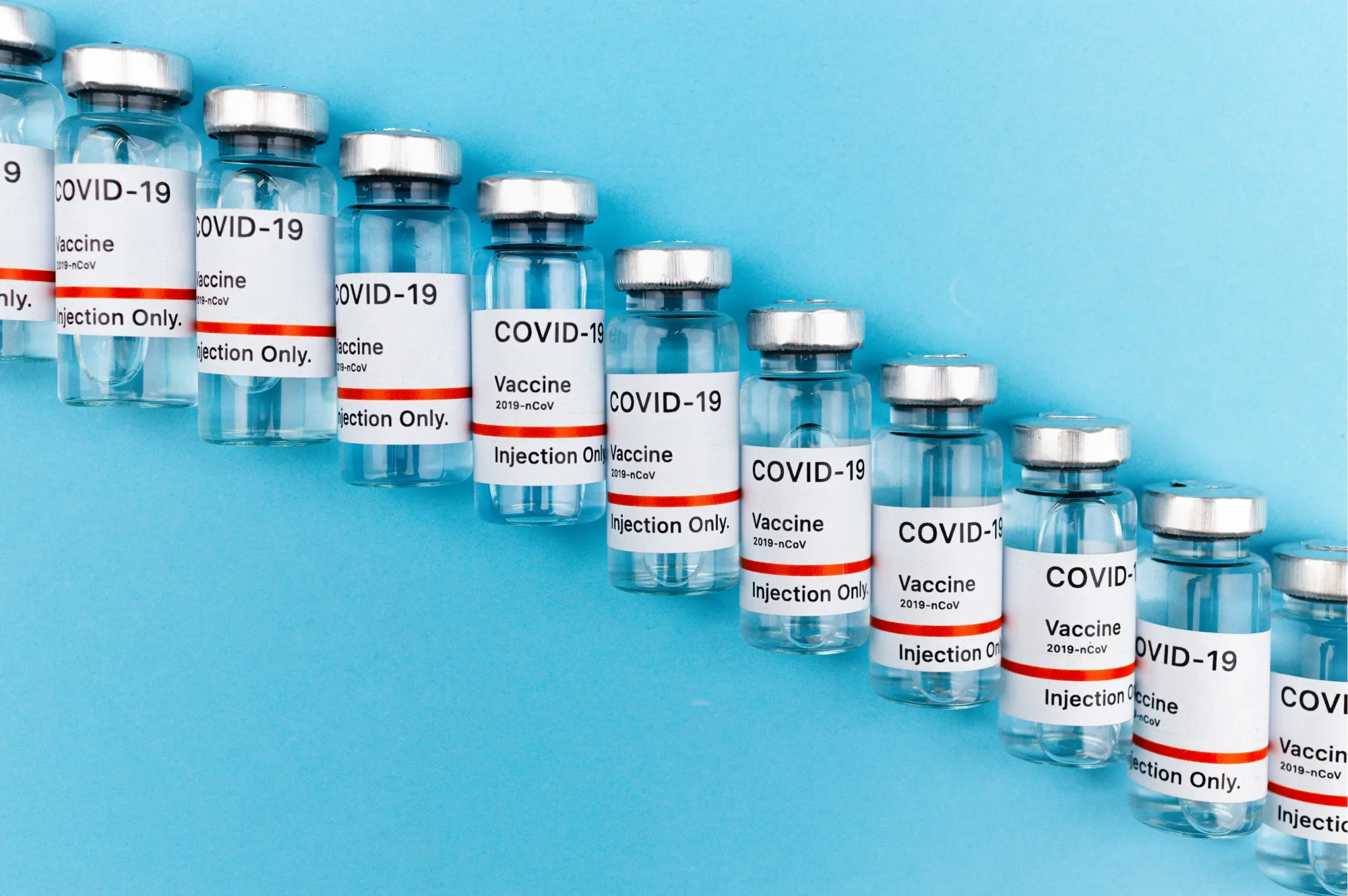
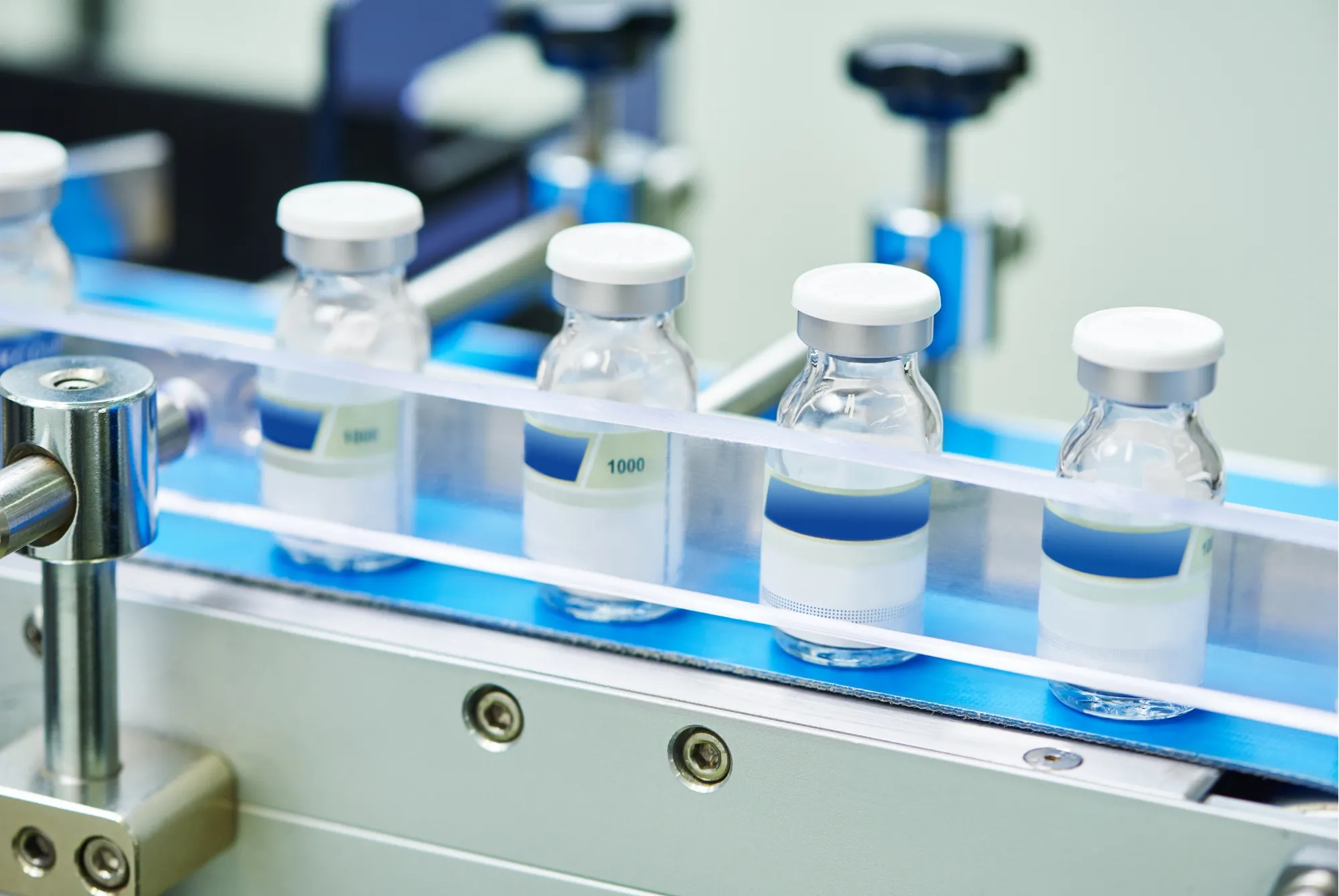
Vaccines
Fragile antigens, sometimes made at the scale of millions of doses.
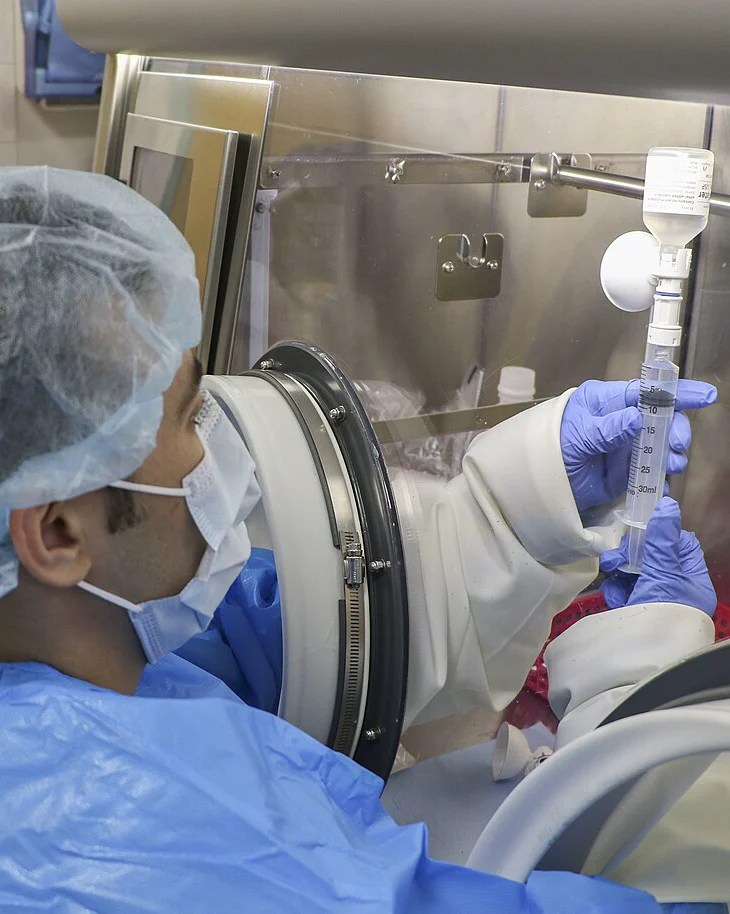
Biologics
Antibodies and therapeutic proteins, sensitive to heat.
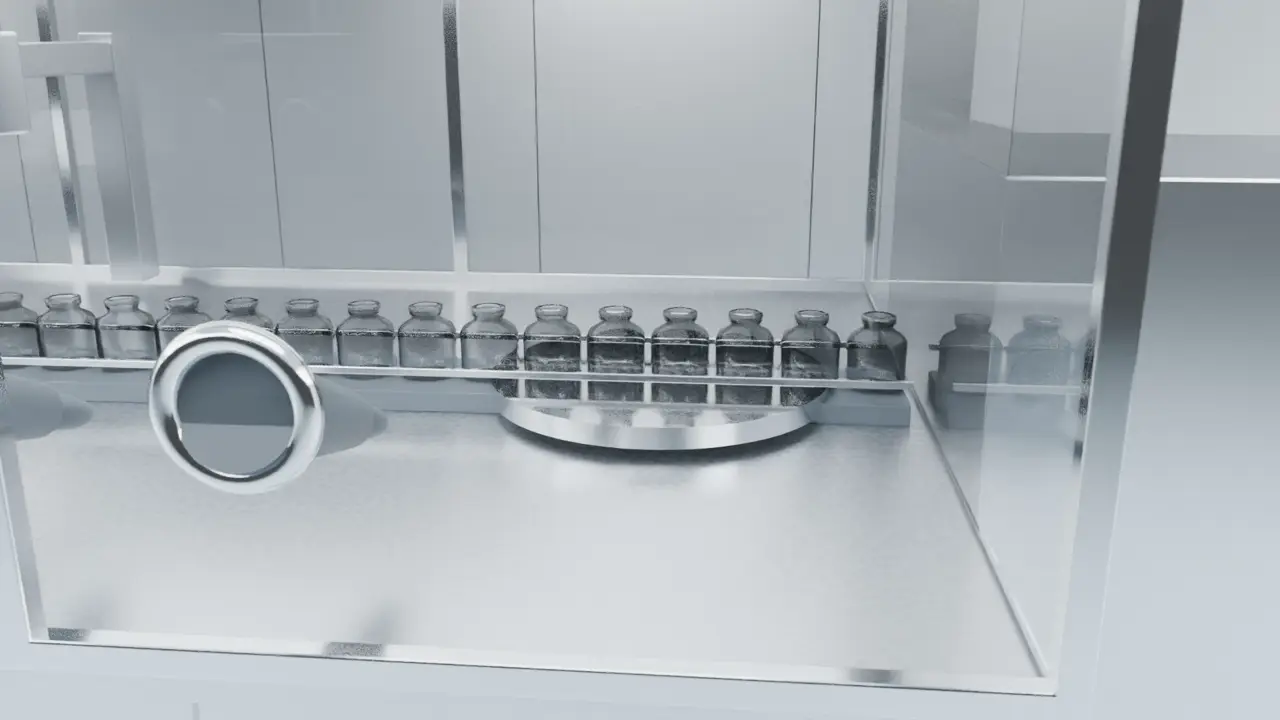
Oncology
Potent injectables: protect the product, and the operator too.
The journey of a vial
Six stages, one single chance.
01 / 06
Washing
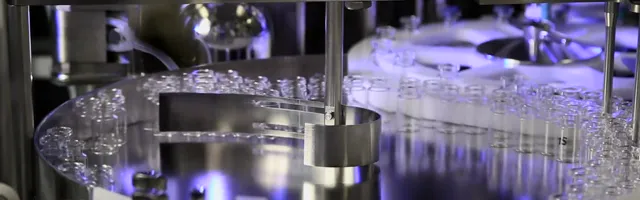
Empty vials are rinsed by jets, with water for injection as the final rinse. Particles leave here.
Final rinseWater for injection
02 / 06
The tunnel
Dry heat sterilizes the glass and destroys endotoxins, the bacterial residues that survive ordinary sterilization.
DepyrogenationAt least 3 log
03 / 06
Filling
The product, passed through a 0.22 µm sterilizing filter, flows into the open vial. Nothing may stand between the air filter and the neck: this is first air.
ZoneGrade A, unidirectional air
04 / 06
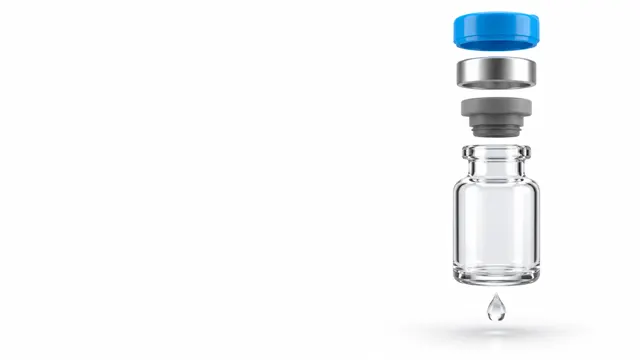
Stoppering
The stopper, sterilized separately, closes the vial under the same airflow. For a freeze-dried product, it stays half seated until drying ends.
Before closureGrade A air
05 / 06
Crimping
The aluminium cap locks the stopper. The operation generates particles: it is kept apart from filling, and the vial stays protected until it is crimped.
StationSeparate, with extraction
06 / 06
Inspection
Every filled vial is inspected, by hand or by camera, for particles, cracks or closure defects.
Check100% of vials
Air, the first ingredient
How many particles in one litre of air?
The closer to the open vial, the less the air may contain. Here are the Annex 1 limits, brought down to a single litre.
particles ≥ 0.5 µm per litre, at most
Microbes in the air
Illustrative drawing: the number of dots is not to scale. Limits: EU GMP Annex 1 (2022), tables 5 and 6; ordinary air: ISO 14644-1, class 9.
The walkthrough · Aseptic fill and finish
Four doors to Grade A.
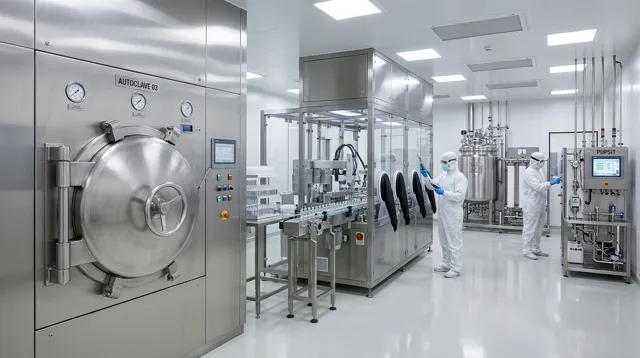
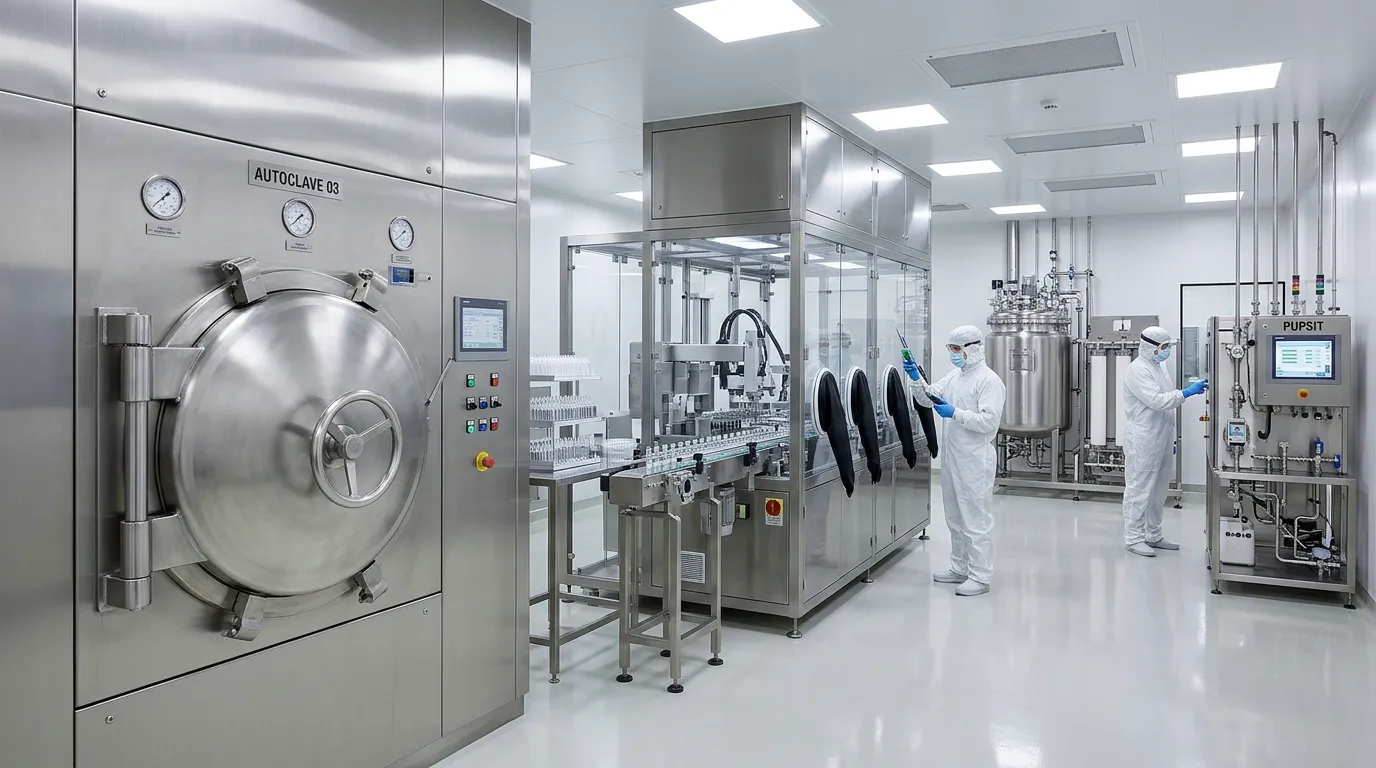
An aseptic fill-and-finish suite, from the general corridor to the RABS gloves, then the path of the vial: at every door, the grade rises, the gowning changes and the pressure goes up.
The general corridor
Outside the clean area, at the lowest pressure. Air from the graded rooms only ever flows out.
The first gown
Street clothes stay in the locker, hands are washed, Grade D garments go on. Only one airlock door opens at a time.
The step-over bench
Garments go on at the dirty side; each overshoe goes on above the bench and lands on the clean side.
Sterile gowning
Hood, mask, goggles, coverall, gloves, then boots above the bench: qualified gowning.
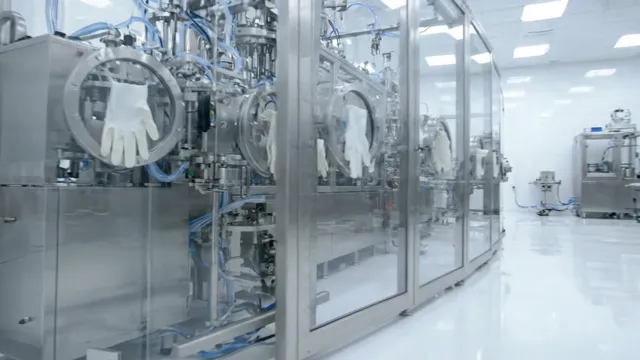
Hands in the gloves
UDAF, first air, AFV: nothing ever comes between the filter and the open vial.
From the tunnel to filling
Washed and depyrogenated, the vials leave the tunnel straight under the RABS, then are filled and stoppered. Ready-to-use (RTU) components come in through the material airlock.
All the way to the finished product
Stoppers and caps autoclaved, crimping at its own station, freeze-drying or terminal sterilization, then visual inspection.
Pressures shown as an example: each site justifies its own. Particles: Annex 1 limits; the dots on screen are an illustration.
The barrier
Keeping people away from the vial.
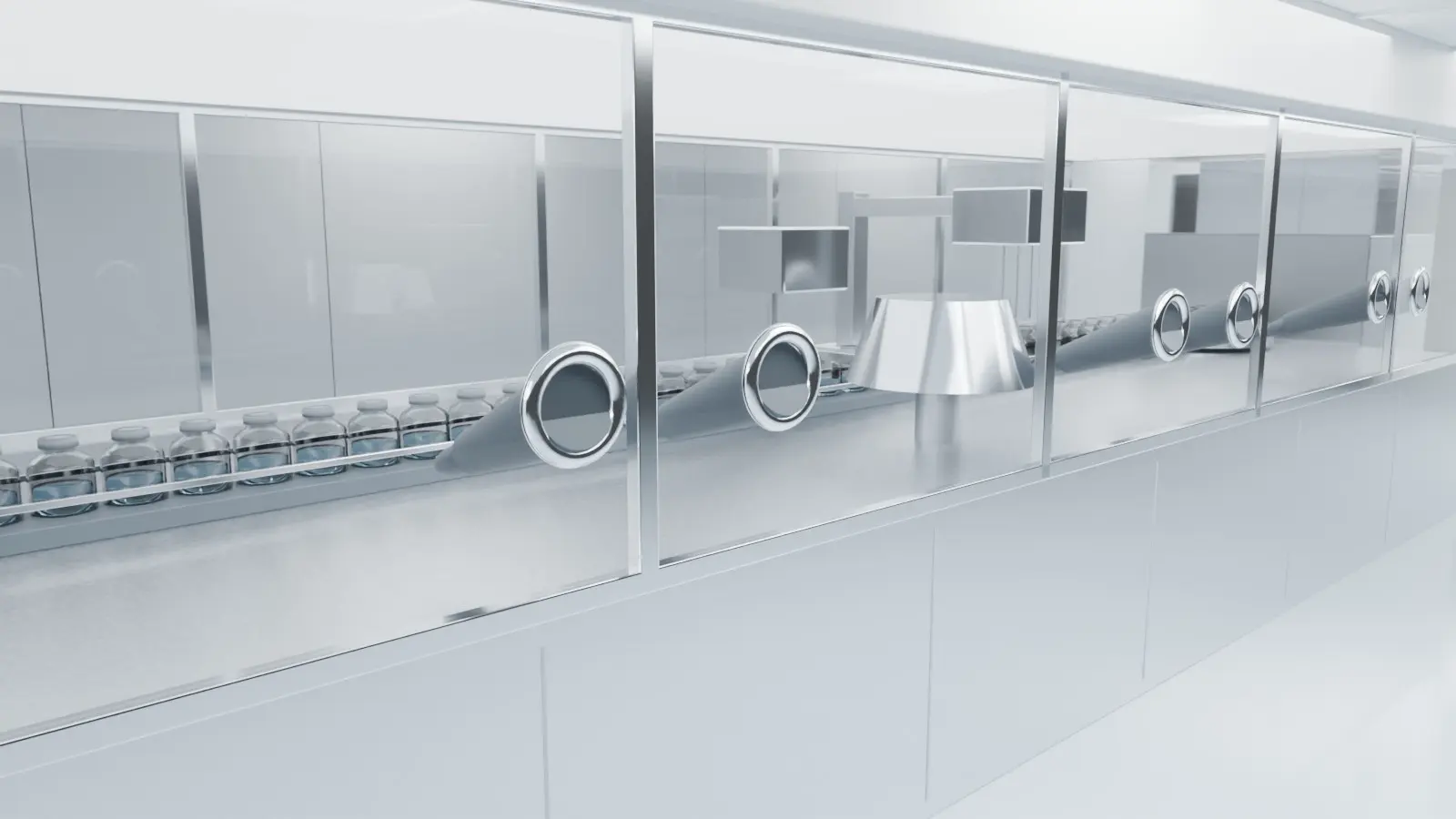
People remain the main source of contamination in a cleanroom. Annex 1 therefore expects barriers: two main families, two approaches.
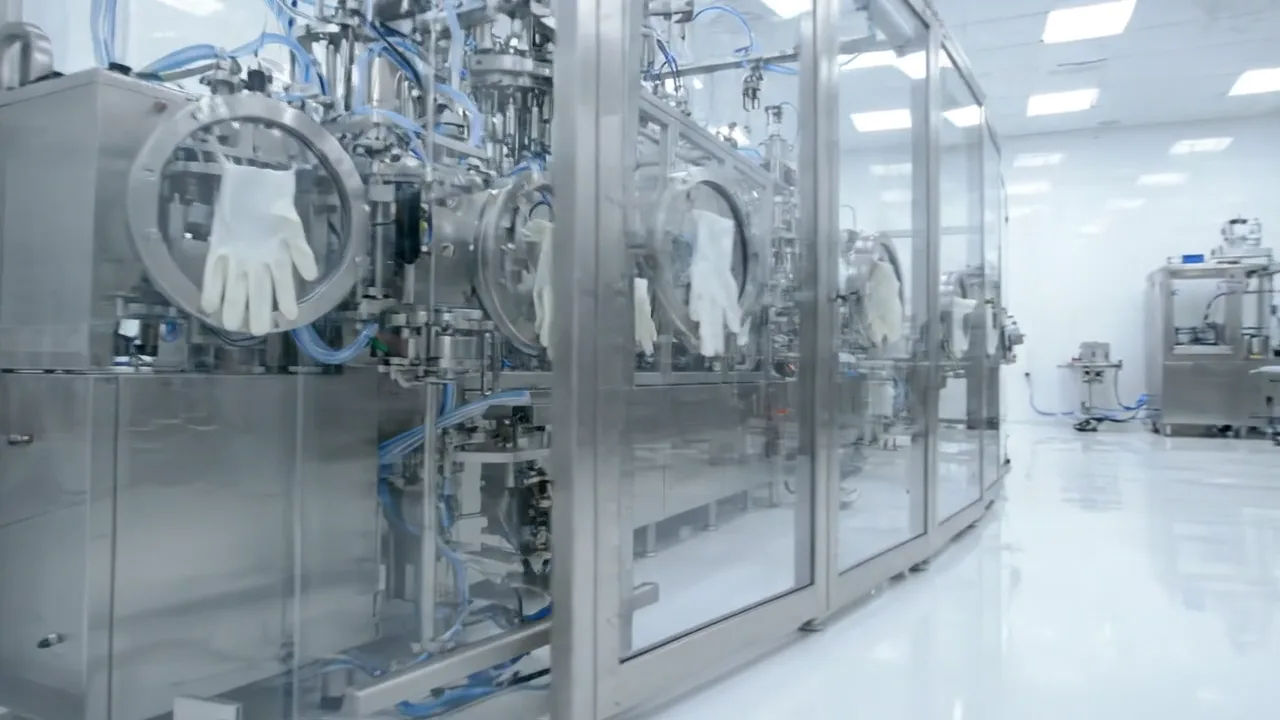
- At least Grade B
- Around the machine
- Grade C or D, depending on design
- Sporicidal agent, partly manual
- Decontamination
- Automated, validated cycle, often vaporized hydrogen peroxide
- Through the gloves; opening stays exceptional and controlled
- Interventions
- Through the gloves, without breaking the enclosure
- More flexible, but the whole surrounding room stays demanding
- The trade-off
- More separation, but heavier cycles and project
The proof
Everything is replayed. With growth medium.
Since every dose cannot be tested, the process is simulated: the aseptic process simulation (media fill) fills vials with a nutrient broth, under the worst foreseen conditions, interventions included. They are incubated, then inspected one by one.
A single cloudy vial is enough to fail the run and open an investigation.
- 3successful consecutive simulations to qualify a line
- 6 monthsor so between two periodic requalifications
- 0contaminated units: the only accepted target
The language of the trade
Eight words to follow the conversation.
- First air
- Filtered air that reaches the vial before touching anything. Nothing may interrupt it.
- UDAF
- Grade A unidirectional airflow: it falls as one and sweeps particles away.
- AFV
- Airflow visualization with smoke: it shows on film that the air behaves as intended.
- CCS
- The contamination control strategy: the document linking every measure on site.
- PUPSIT
- Integrity test of the sterilizing filter after its sterilization, before use.
- Depyrogenation
- Destroying endotoxins, which cause fever and which sterilization does not remove.
- CCIT
- Container closure integrity test: does the vial really stay sealed?
- Intervention
- Any human action in the critical zone. Each one must be planned, described and simulated.
Your line, with our team.
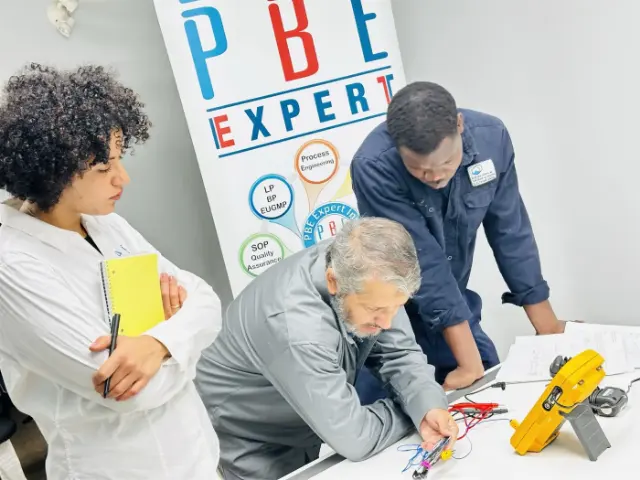
Design, equipment, qualification, inspection readiness: the PBE Expert team supports your aseptic filling projects.
EMA Annex 1Aseptic equipmentFacility design
Sources: EU GMP Annex 1 (2022) and ISO 14644-1. This page is a summary; only the official texts prevail.